
4. My developed tone mapping algorithm
- Nov 16, 2015
- 2 min read
Firstly, here is some background of High dynamic range (HDR) image: natural sceneries often have a HDR ratio that exceeds 100,000:1. Although good-performance HDR sensors can capture HDR images, most display devices are limited dynamic range (LDR) which is about 8-bit. In this mismatch, the details of the HDR image will lost, such as can be seen in over-exposed or under-exposed scenes. To solve this challenge, tone mapping algorithms have been used to adapt the captured HDR image to the LDR display devices while still maintaining image details.
When I analyzing and summarizing my previous tone mapping algorithm, I found several points where maybe can be improved. The first one is the contrast of the output images. I thought the contrast can be better although it's not bad for the previous algorithm. Of course, better contrast will impress more people.
The second point is the computational complexity of the algorithm. In my idea, the previous algorithm is a little too complicated, although we can use my speedup technology to decrease the complexity to some degree.
Therefore, in this month, I developed a new tone mapping algorithm based on the histogram idea. The histogram idea will show its power and advantages when doing video processing. Because usually, we assume that the response time of our human visual system is slower than the transfer speed of scene illumination. In the video processing, we can use the previous frame's information as the parameters when we deal with the present frame. It can help us increase our computational time.
In addition, to show the details in the WDR image better, I introduced a new technology in my algorithm. Because the work is still under working and not published, I can't show more details now. After we publishing our work, I will update this article with more details. Thank you for understanding.
To compare the performance of different tone mapping algoeithms, we have very few criterion. The tone mapping quality index (TMQI) proposed by Yeganeh and Wang is used to assess the performance [1].
I applied more than two hundred hdr images by my algorithm. The average TMQI score can reach 0.89. The range of TMQI score is from 0 to 1, where 1 is the highest. By comparing with two very famous tone mapping operator, Drago [2]'s and Fattal [3]'s algorithm, we build this comparision figure. From the figure, we can see our average TMQI is higher than both of them. To some degree, it means our algorithm's performance is better. In Drago's implementaion, we selected the bias parameter b=0.85 as defalut as Drago mentioned in his paper.

Now, here are some comparision images between the original WDR image, Drago's, Fattal's and ours. The images are obtained by a open source software called Luminance HDR.
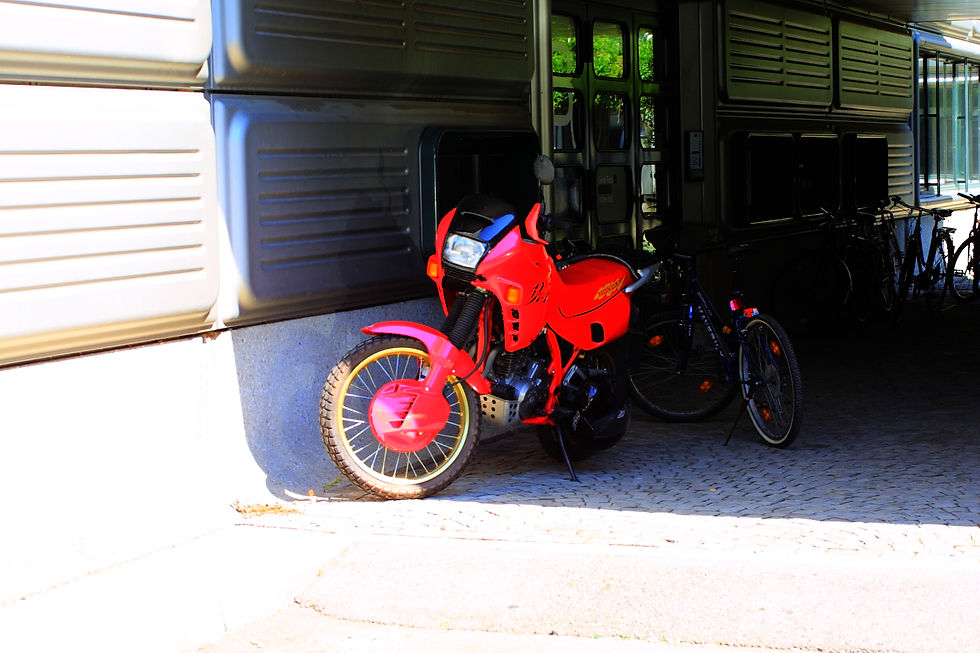
Drago
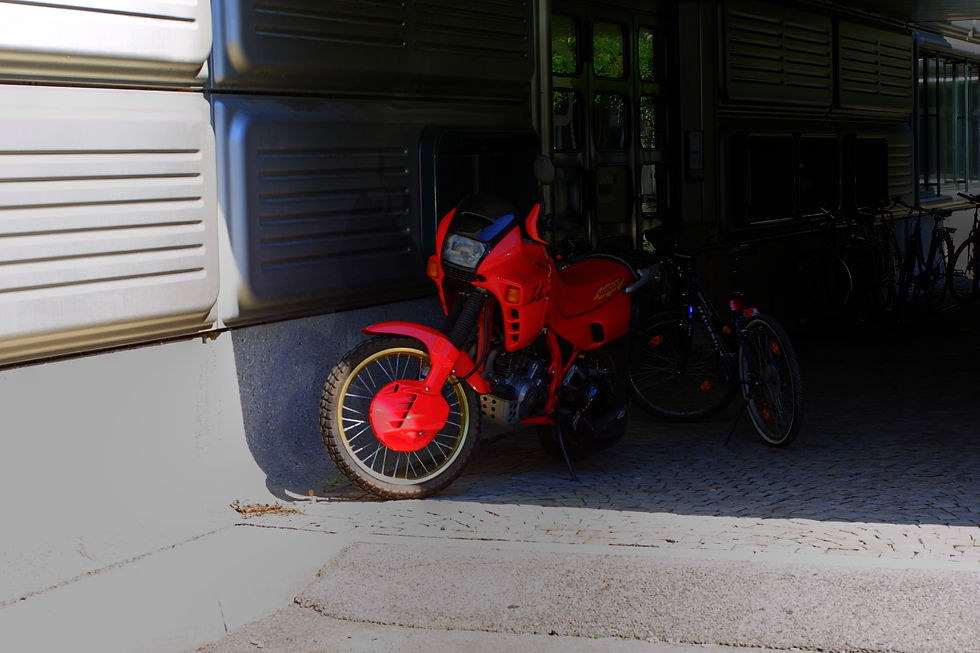
Fattal

Mine
Reference
[1]. H. Yeganeh and Z. Wang, "Objective Quality Assessment of Tone Mapped Images," IEEE Transactions on Image Processing, vol. 22, no. 2, pp. 657-667, Feb. 2013.
[2]. Drago F, Myszkowski K, Annen T, et al. Adaptive logarithmic mapping for displaying high contrast scenes[C]//Computer Graphics Forum. Blackwell Publishing, Inc, 2003, 22(3): 419-426.
[3]. Fattal R, Lischinski D, Werman M. Gradient domain high dynamic range compression[C]//ACM Transactions on Graphics (TOG). ACM, 2002, 21(3): 249-256.
Comments